The veterinary case-log notebook

Organise. Remember. Learn.

When it's organised on paper, it's organised in your mind. VetCo gives every patient the same double-page record, so your notes follow the way a clinician thinks.

Shop notebooks —

250+ vet students RVC · Surrey · CEU 200 pages · a record for every patient

An example case in a real VetCo V2 record — Mochi, 14, chronic kidney disease.
The problem

Three patients in, most notebooks turn into chaos

On EMS and rotations, information arrives in the wrong order. The owner mentions the diet halfway through the exam, a heart rate ends up next to a drug dose, and by the evening you can't tell which notes belong to which patient.

  • A place for everythingEvery question and every body system has its own box, so information lands where it belongs — whatever order it arrives in.
  • The same order, every patientSignalment, history, exam, problems, differentials, plan. Repeat it for every case and it becomes the way you think.
  • Nothing to look upReference tables and history questions at the front, for the moment your mind goes blank.

See the record, box by box

The VetCo title page — the VetCo logo above a quote from Arthur Schopenhauer: “Compassion for animals is intimately connected with goodness of character”.
The heart of VetCo

Anatomy of a patient record

One double-page spread for every patient, and every box on it is there for a reason. Scroll through them, tap a number on the page — or switch to V1 to compare.

Discover each page

200 pages, every one with a job

The record is the heart of it. Around it: reference pages at the front, shorter layouts for quick consults, and room to think at the back.

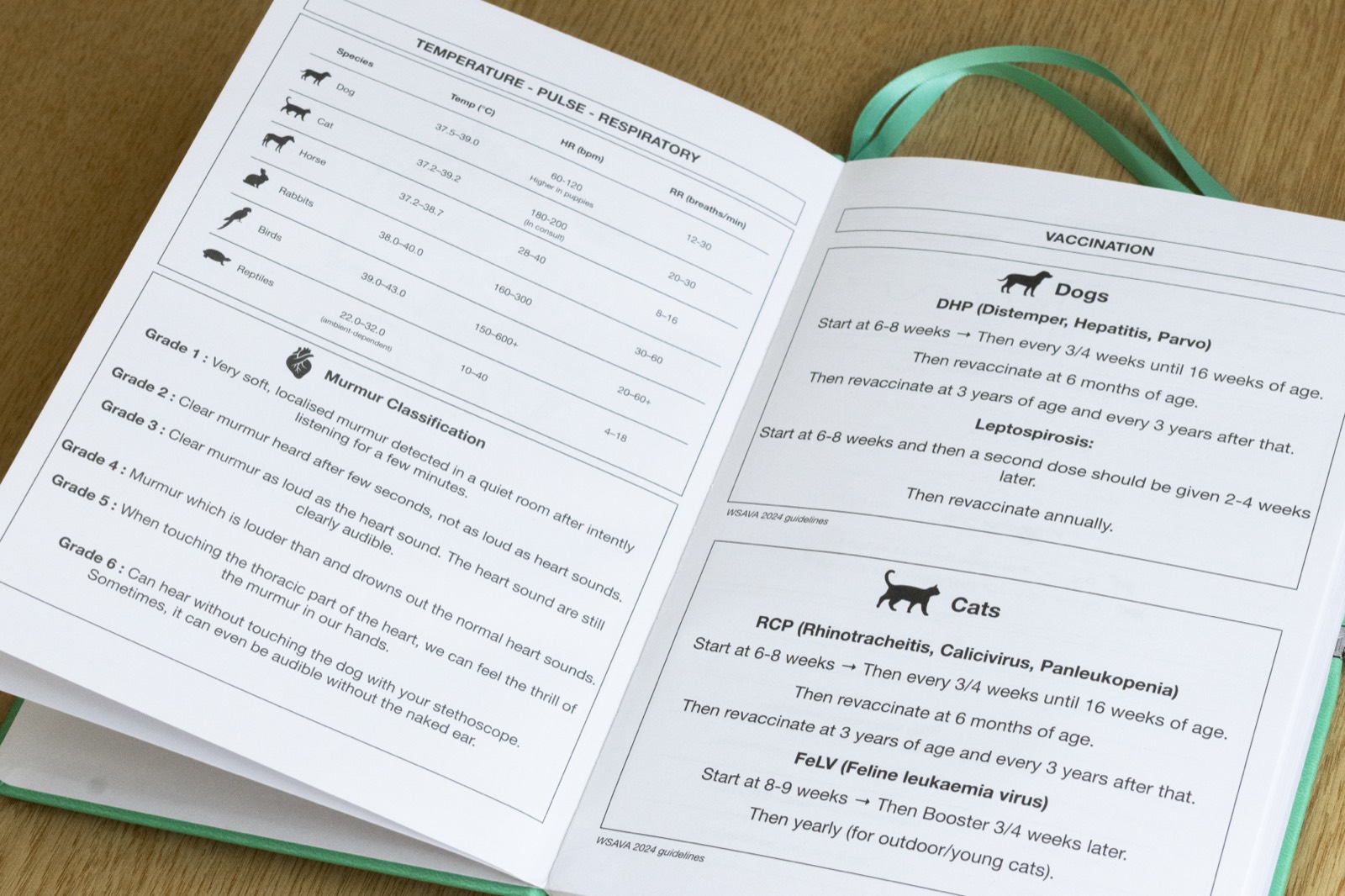
Pages 2–3: a temperature, pulse and respiratory rate table by species, murmur grades 1 to 6, and the WSAVA dog and cat vaccination schedules.
Pages 2–3

Quick reference

  • Normal TPRs for six species
  • Heart murmurs, grade 1 to 6
  • Dog and cat vaccine schedules
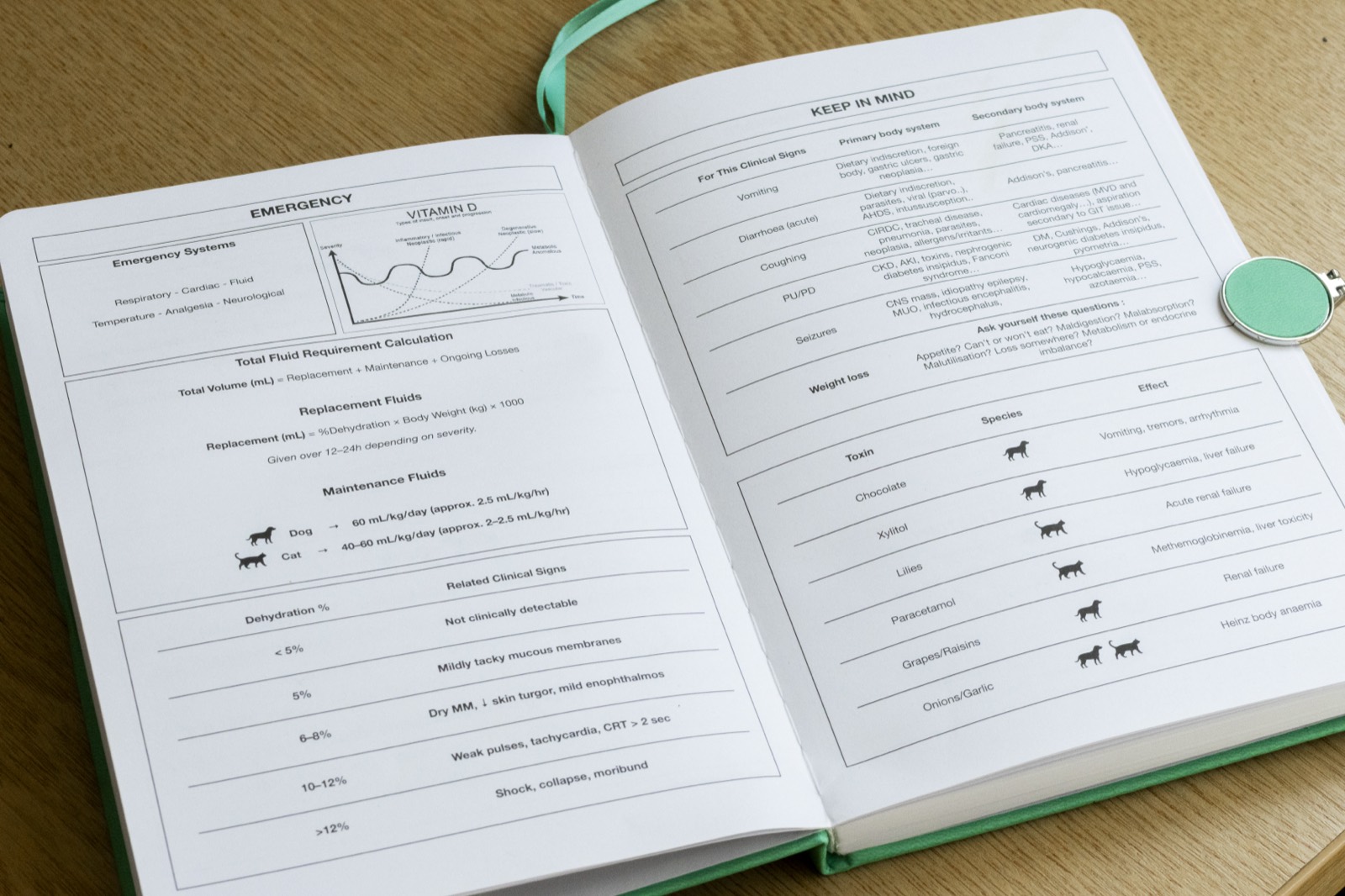
Pages 4–5: emergency systems and a disease-progression graph, the total fluid requirement calculation, a dehydration percentage table, a clinical-sign to body-system differentials table, and a common toxins table.
Pages 4–5

Emergencies

  • Spot dehydration and work out fluids
  • What each sign could point to
  • Common poisons and what they do
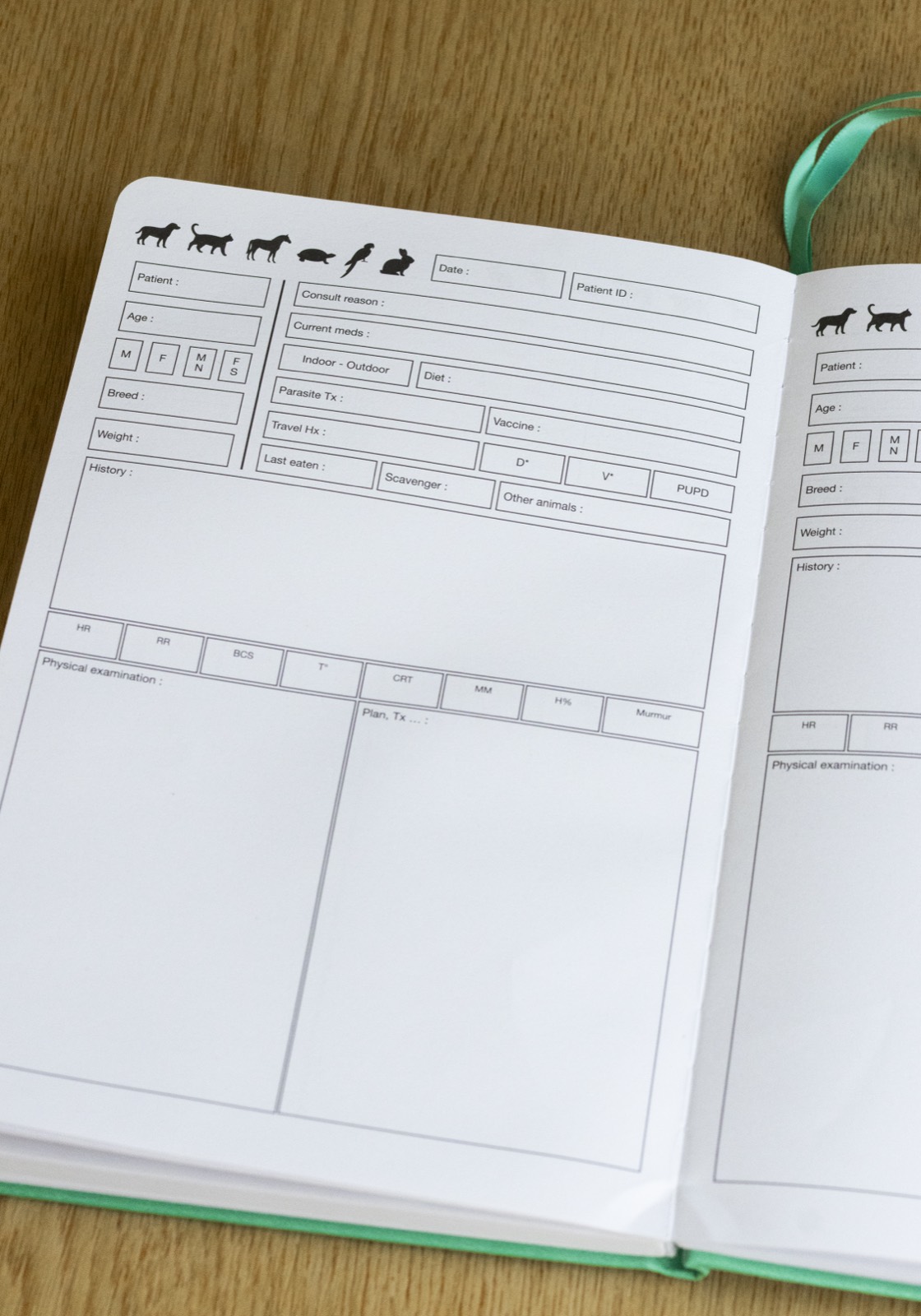
Pages 8–155: a double-page patient record with signalment, history, physical examination, prioritised problem list, differentials, plan and key take away.
Pages 8–155

Double pages

73 full records, one per patient — from history and exam through to your plan.

Pages 156–168: two single-page patient records side by side, each a condensed version of the double-page layout.
Pages 156–168

Single pages

Shorter layouts for quick visits — vaccinations, travel checks and rechecks.

Pages 170–200: a blank dotted double-page spread for notes and sketches.
Pages 170–200

Dotted pages

30 blank dotted pages for notes and sketches.

Turn them yourself

Flip through every spread in V1 and V2, then pick your colour.

Choose your colour

Why not match your stethoscope?

Ten finishes across VetCo V1 and V2, every one .

See all ten colours

250+
Students using VetCo
200
Pages per notebook
3
New projects coming soon

Start your next patient on the right page

Ten colours, two interiors, one way of working. each — or two for , three for .

Choose your colour